Visualization
Table of Contents
Second Week: studying visualization
Working with the study plan I set myself last weeks is working quite well for the moment. During the last week I managed to spend some time with every point on the list in my last post and even did some study on tactics and endgames. I’ll write about that somewhen in the future.
Since I decided to spend more time with studying from actual books rather than on Chessable, visualization became even more a topic of interest to me. On the one hand just because of the simple reason that I would like to be able to read chess books at evening in the bed or during the day while riding the public transport - just anywhere without a board within reach. On the other hand its just a fact that visualization helps a lot with the calculation during a game of chess. The ultimate goal would be to play a blindfold game with someone somewhen - but this will take some time…
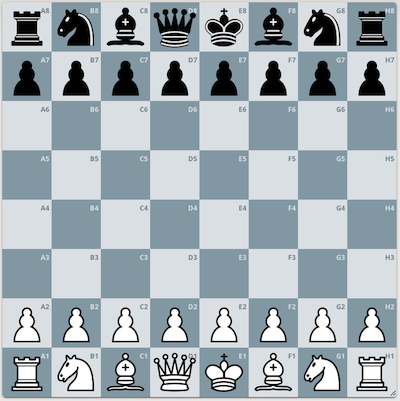
The first and easiest step to take was to set my lichess settings to „Board coordinates: All squares of the board“. On top of that I’m trying to speak every move I make in a classical online game out loud (to manually write down the moves during an online game goes - for now - too far). Occasionally some thoughts and doubts came up if I shouldn’t be further at my level, if I really should need actions like those. But if im honest to myself it’s clear, that I haven’t internalized the coordinates as good as I should have over the last years. There is still plenty of room for improvement.
Short games for practice
During the last week I worked on my visualization by playing the following games in my head while I was riding the public transport or walking somewhere:
NN - Du Mont, Paris Casual Games Paris, 1802
1.f4 e5 2.fxe5 d6 3.exd6 Bxd6 4.g3 Qg5 5.Nf3 Qxg3+ 6.hxg3 ___________________# 0–1
Meek,Alexander Beaufort – NN, New Orleans New Orleans, 1855
1.e4 e5 2.f4 exf4 3.Nf3 d5 4.Nc3 dxe4 5.Nxe4 Bg4 6.Qe2 Bxf3 7.__________________# 1–0
Greco,Gioacchino – NN, Greco Europe, 1620
1.e4 b6 2.d4 Bb7 3.Bd3 f5 4.exf5 Bxg2 5.Qh5+ g6 6.fxg6 Nf6 7.gxh7+ Nxh5 8._______________# 1–0
Pillsbury,Harry Nelson – Fernandez, Blindsimultan Havana, 16.03.1900
1.e4 e5 2.Nc3 Nc6 3.f4 d6 4.Nf3 a6 5.Bc4 Bg4 6.fxe5 Nxe5 7.Nxe5 Bxd1 8.Bxf7+ Ke7 9._________# 1–0
The goal is to go through the game in your head and find the last move - which is the one to checkmate!
The example games I discovered on a school chess website, where you can find more of those exercises: Here’s the PDF. (In German, so different notation)
In addition I sometimes play around with the coordinates training tool on lichess, but I haven’t found a time mode yet which brings joy to me.
More Ideas
More ideas/resolutions regarding visualization training are the following:
-
start with the book „Blindfold Endgame Visualization“ by Martin B. Justesen , who was so kind to send me a copy after I sent him a chess calendar some years ago.
-
Play OTB matches, write my moves down and go through the notation in my head back at home